


The Review Meeting for the 2018 National Major Scientific Instrument Development Projects (Departmental Recommendation) Was Held in Beijing
2018-07-06


On July 30–31, 2018, the National Natural Science Foundation of China (hereinafter referred to as the NSFC) convened the review meeting for the 2018 Major Scientific Instrument Development Projects (department-recommended) at the Beijing Western Suburban Hotel. Academician Li Jinghai, Secretary of the NSFC Party Leadership Group and Director of the NSFC, attended the meeting and delivered a speech. The opening ceremony was chaired by Gao Ruiping, a member of the NSFC Party Leadership Group and Deputy Director of the NSFC. A total of 28 members of the Expert Committee and 7 invited experts participated in the review meeting.
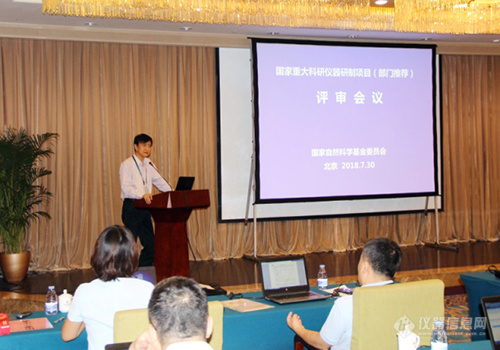
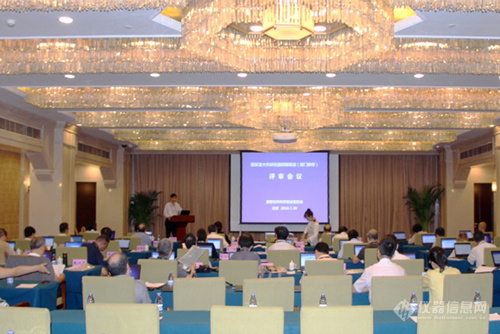
In 2018, a total of 51 applications were received for the Major Scientific Instrument Development Program (department-recommended). Following preliminary review, peer review by correspondence, and selection and evaluation by the Expert Advisory Committee of the Science Division, 15 projects were recommended for review at the meeting. Based on thorough presentations by the applicants and extensive deliberation, the review panel conducted careful consideration and secret-ballot voting, ultimately recommending three projects for funding. These recommended projects will then undergo budget review and on-site inspection before being submitted to the Commission’s Executive Meeting for approval.
The meeting successfully completed all its agenda items.
Compared with the 54 project applications submitted in 2017, only 14 projects were selected for review at the Expert Committee meeting this year, representing a slight decrease in the number of applications. However, one additional project was admitted to the review stage, indicating an overall improvement in the quality of the submissions. Furthermore, although the Expert Committee’s membership was reduced by one member this year—down from 29 full members and 5 invited experts in 2017—the number of invited experts increased from 5 in 2017 to 7, underscoring the heightened emphasis placed on the evaluation of major scientific instruments. In light of the President’s July 13 address, which stressed the need to “cultivate a group of scientific instrument manufacturing enterprises,” the changes in both the number of applications and the level of expert participation at this year’s review meeting reflect a stronger commitment to prioritizing and refining the development of major research instruments. It is expected that these efforts will provide significant impetus for the advancement of China’s major instrumentation industry.
Next page
Contact Information
Address: No. 11 Shuangchuan Road, Tianjin Beichen Science and Technology Park
Muffle Furnace Series
Tube Furnace Series
Drying Oven Series


WeChat Official Account
Customer Service QR Code